
Introduction
In the busy world of marketing, the terms “inbound” and “outbound” have attracted attention. These two distinct approaches aim to reach potential customers, but they adopt opposing strategies and techniques. This article will dive deeper into the fundamental differences between inbound and outbound, helping you determine which approach is best for your business.
Inbound marketing: attracting prospects
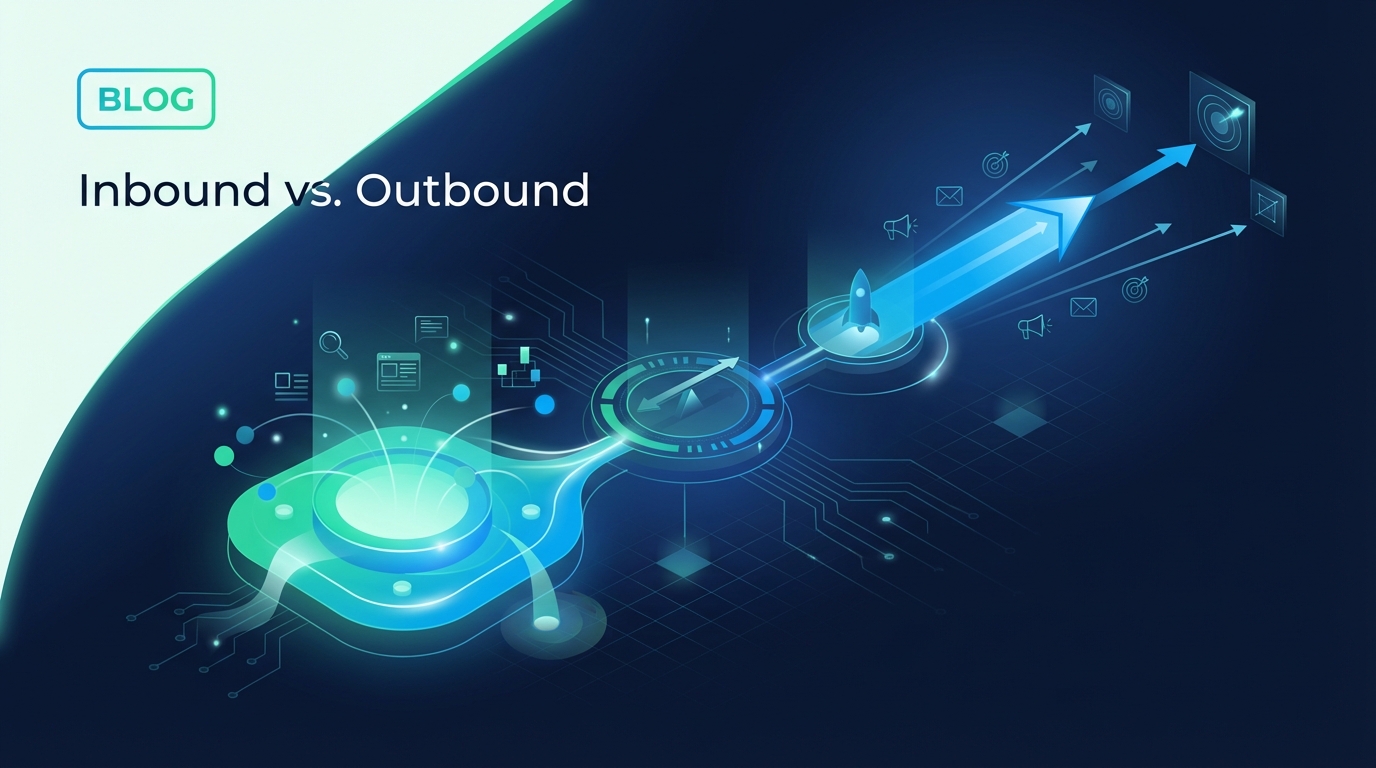
Inbound is a customer-centric approach that aims to attract qualified prospects to your business by providing them with valuable and relevant information. It relies on creating quality content, search engine optimization (SEO), and social media to attract prospects to your website.
- ObjectiveAttract qualified prospects naturally
- StrategiesContent Creation, SEO, Social Media Marketing
Outbound marketing: reaching prospects
Outbound, on the other hand, takes a more direct approach. It involves proactively contacting prospects through channels such as email marketing, cold calling, and paid advertising. This approach aims to broadcast a message to a wide audience in the hopes of generating leads or sales.
- ObjectiveReach a large audience and generate leads
- StrategiesEmail marketing, cold calling, paid advertising
Key differences between inbound and outbound
1. Pull Strategy vs Disruption Strategy
Inbound attracts prospects by providing value, while outbound interrupts them with promotional messages.
2. Cost
Inbound can be more profitable in the long run because it relies on organic methods to attract prospects. Outbound, on the other hand, can be more expensive because it involves advertising expenses and cold calling.
3. Target
Inbound targets qualified prospects who are interested in what you have to offer. Outbound targets a wider audience, even though it may not be relevant.
4. Personalization
Inbound allows for further personalization of messages because it allows you to target prospects based on their interests and behavior. Outbound is less personalized and relies on a uniform message.
5. Commitment
Inbound promotes deeper engagement with prospects because it provides them with useful information and engages them in conversations. Outbound can be more superficial and less engaging.
6. Measurement
Inbound is easier to measure because you can track website traffic, conversions, and engagement. Outbound can be harder to measure because it’s harder to attribute conversions to specific efforts.
When to use inbound or outbound
The best approach for your business will depend on your goals and resources.
- InboundSuitable for businesses that want to attract qualified leads, build trust and build lasting relationships.
- OutboundSuitable for businesses that want to reach a large audience, generate leads quickly, or promote specific offers.
Conclusion
Inbound and outbound are two distinct marketing approaches with their own advantages and disadvantages. By understanding the differences between the two, you can make an informed decision about which approach best fits your overall marketing strategy. Whether you choose inbound, outbound, or a combination of the two, the ultimate goal is to attract and convert prospects into loyal customers.
Read next
To relate this topic to a more concrete business workflow:
-
LinkedIn Intent Signals - to understand the signals that merit action
-
Prioritization of hot leads - to classify the prospects to be processed now
-
B2B SEO blog internal linking guide - to strengthen the editorial linking